
Introduction
Winter seems to have arrived with a bang in the UK, and one of the most important pre‑layup jobs on any inboard‑powered boat is protecting the engine's cooling system. A few simple checks now can prevent cracked components, corrosion, and expensive repairs when you come to use the vessel again in the spring.
This guide focuses on the cooling system - the part most vulnerable to freezing temperatures and salt‑water corrosion, and outlines a straightforward, environmentally responsible winterisation routine.
Whether your engine is fresh‑water cooled or raw‑water cooled, the process is largely the same (simply omit the freshwater coolant and heat‑exchanger checks on raw‑water‑cooled engines).
"A few simple checks now can prevent cracked components, corrosion, and expensive repairs when you come to use the vessel again in the spring."
1. Start With a Visual Inspection
Before touching anything, take a few minutes to look over the cooling system:
- Check hose clamps for rust, distortion, or looseness.
- Inspect raw‑water hoses for cracking, soft spots, or bulging. A gentle squeeze can reveal early signs of perishing.
- Look for salt deposits around joints — often a sign of minor leaks. Corrosion "blooming" on aluminium castings usually means a joint should be disassembled, cleaned, and reassembled before the issue develops into something more serious.
- Ensure the seacock, strainer, and fittings are secure and free from debris.
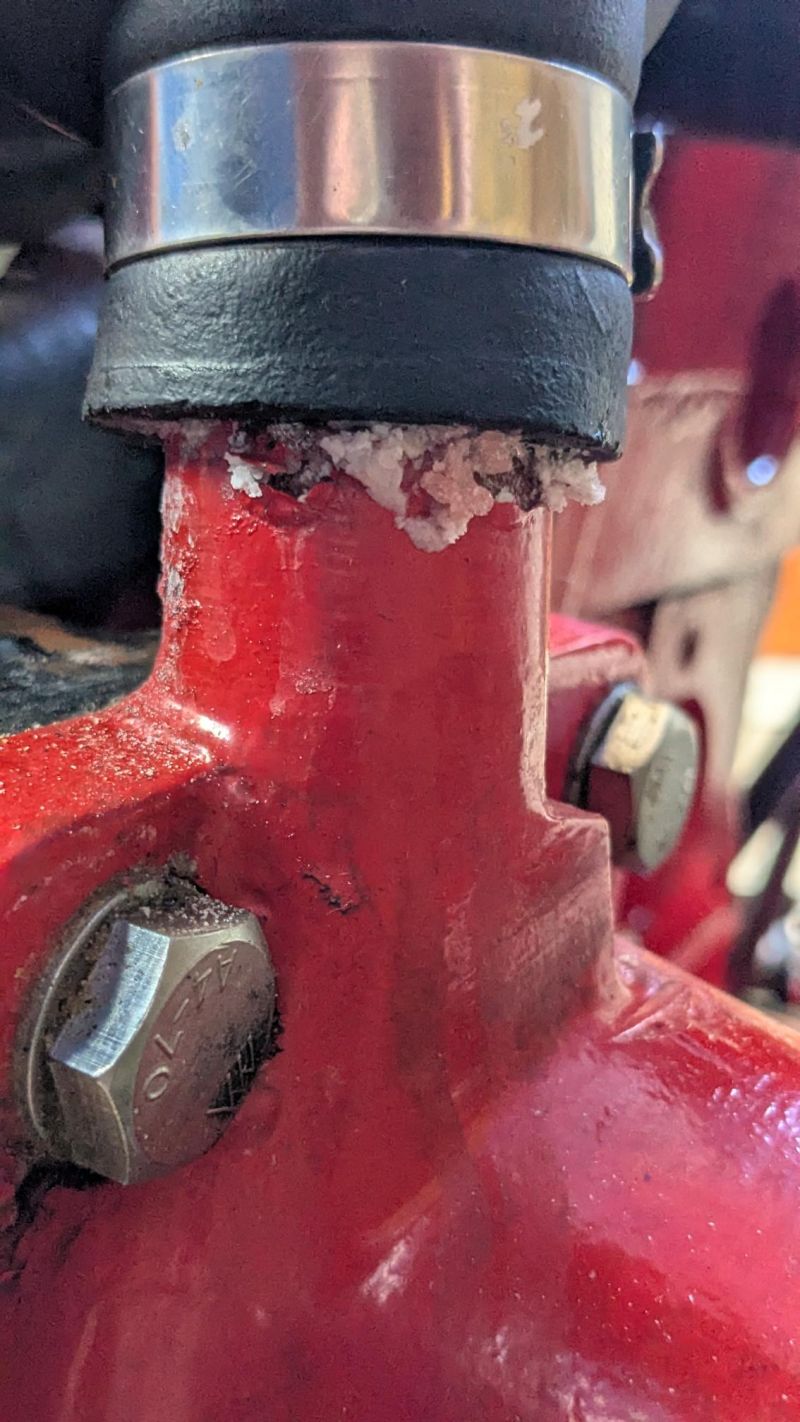
Small issues here can become big problems over winter.
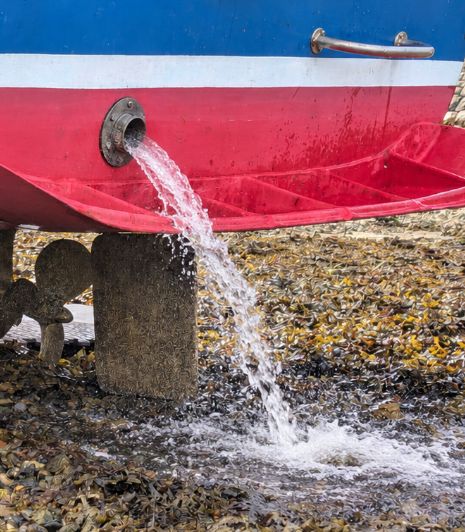
2. Flush the Raw‑Water System With Fresh Water
Salt left inside the cooling system is the main cause of corrosion during lay‑up. A thorough fresh‑water flush removes salt deposits and reduces the chance of salt crystallisation in water passages over winter.
The Correct Method
- Close the seacock.
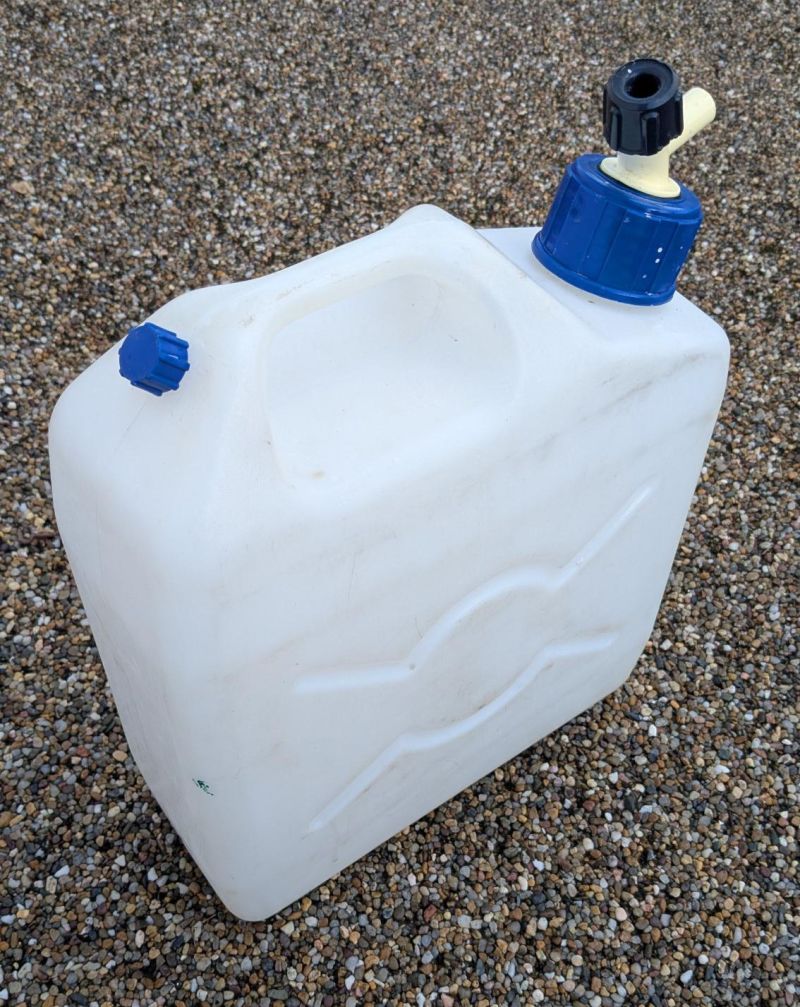
- Feed fresh water into the strainer or pump inlet. If you're afloat or don't have access to a hose, a small portable tank with a tap works well. The raw-water pump must receive an adequate, continuous water supply when running the engine. Do not allow the impeller to run dry and always follow your Manufacturer's specifics.
- Run the engine in neutral at idle for 5–10 minutes. Any longer offers negligible flushing benefit.
Note on Antifreeze Flushing
- Antifreeze flushing of the raw‑water circuit is not always necessary, particularly where the system can be completely drained. However, some installations contain components or low points that cannot be reliably drained. In these cases, an appropriately specified and mixed marine winterising antifreeze may be required. Always follow the engine manufacturer's instructions for the correct procedure.
- Where antifreeze is used, any discharge should be collected and disposed of responsibly to avoid environmental contamination.
- A properly drained raw‑water circuit does not require antifreeze for freeze protection.
3. Drain the Raw‑Water Side Completely
Once flushed, the raw‑water circuit should be drained as far as reasonably practicable.
- For vessels on hard standing, open the seacock to allow water in the raw‑water circuit to drain away. Note that water can remain trapped in pumps, hoses, heat exchangers and exhaust water locks. Refer readers to your Manufacturer's drain-point procedure.
- Tilt hoses if needed to release trapped pockets.
- Ensure the pump body, strainer, and low points are empty.
A drained system is naturally freeze‑proof.
4. Check Internal Coolant (Freshwater Side)
For freshwater‑cooled engines, the closed‑loop coolant protects the engine block and cylinder head. This side does require antifreeze.
What to Check
- Coolant level
- Antifreeze concentration
- Condition of the coolant (discolouration or debris means it's time to change it)
Aim for a 50% antifreeze mix unless your manufacturer specifies otherwise. Always follow the manufacturer's instructions.
5. Inspect Heat Exchanger and Anodes
Winter is the ideal time to check the condition of the heat exchanger:
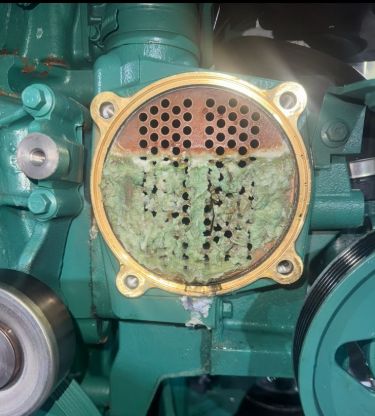
- Remove end caps and inspect the tube stack for fouling. Remove any salt or biofouling deposits.
- Check gaskets for hardening or cracking.
- Inspect internal zinc anodes (where fitted) and replace if more than half consumed.
Hull Anodes (Vessels Staying Afloat)
If your boat uses external hull anodes for bonding and protection and is staying afloat over winter:
- Check they're not excessively wasted.
- Confirm bonding straps to the engine block are intact. Clean terminals, tighten, and protect with dielectric grease.
Good bonding helps to ensure that the cooling system's metal components are protected from galvanic corrosion over winter.
6. Don't Forget the Exhaust Elbow
The exhaust elbow is a common source of springtime overheating:
- Look for internal carbon or salt build‑up.
- Check for corrosion around the water‑injection point.
- Make sure the waterlock (if fitted) is fully drained — trapped water can freeze and crack the housing.
A clean, dry exhaust system is far less likely to cause trouble next season.
7. Dry the Bilge and Engine Bay
Moisture encourages corrosion everywhere, including cooling‑system components.
- Pump or sponge out any bilge water.
- Ventilate the engine space.
- Lightly oil or spray exposed metal surfaces with a corrosion inhibitor.
A dry bilge is one of the simplest ways to protect your engine over winter.
8. Final Lay‑Up Checks
Before closing the hatch:
- Confirm the seacock is closed and leave a note next to your ignition key to remind you to re-open it!
- Ensure all hoses and clamps are secure.
- Verify the raw‑water system is fully drained.
These notes make recommissioning quicker and easier.
Why This Matters — What Proper Winterisation Helps To Prevent
Related Technical Articles
For deeper technical reading on the components covered in this guide:
Marine Engine Overheating — Causes, Diagnosis & Solutions → Marine Exhaust Elbow Blockage — Symptoms, Diagnosis & Solutions → Pressure Caps: What They Do, Why Ratings Matter, and How to Choose the Right One →Any checks or observations described in this article should only be carried out by someone who is competent and qualified to do so. This article provides general information only — marine cooling‑system maintenance should be carried out by a qualified marine engineer.