Introduction
Marine engines overheat when the heat generated by the combustion process — and to a lesser extent from friction between moving parts — cannot be rejected quickly enough. Most marine engines are liquid cooled, and nearly all cases trace back to raw water flow loss, poor freshwater coolant circulation, exhaust elbow restriction, or heat-exchanger fouling.
This article explains the real-world causes, the most likely symptoms you will see on the water, and the diagnostic workflow used at Brehon Engineering when refurbishing cooling components.
"Most overheating faults start with raw water flow loss — and they usually develop gradually."
Section 1 — What Overheating Actually Means
Marine engines maintain temperature only when cooling water moves freely through the system. Any restriction — seawater, coolant, or exhaust-side — can cause excessive temperature rise.
Common Symptoms
- Gradual temperature creep at cruise
- Sudden temperature spike at high RPM
- Excessive steam at the exhaust outlet
- Reduced performance under load
- Engine maintains a stable temperature at idle/low RPM but overheats at high RPM/full load
- 'Hot engine smell'
Section 2 — Primary Causes of Marine Engine Overheating
Raw Water Flow Problems
Raw water flow loss is one of the most common causes of overheating on engines that do not run on closed-circuit systems (e.g. keel coolers). In this context, 'raw' water describes the water drawn in from outside the vessel, which circulates through the engine, removes heat energy and is discharged again — usually via a 'wet' exhaust hose. This water is either fresh, 'brackish' or saltwater depending on the environment in which the boat is being used.
Typical Restrictions
- Raw water pump impeller failure — cracked or missing vanes
- Clogged seawater strainer — weed, sand, debris, biological growth
- Blocked water intake — hull fouling, plastic bags, shell growth
- Collapsed hoses — internal delamination under suction
- Pump wear — scored pump body, worn bearings, leaking seals
Thermostat Problems
A thermostat stuck fully or partially closed prevents or restricts coolant circulation around the engine block, causing rapid overheating even with good raw water flow. Equally, an incorrectly specified or fitted thermostat can cause similar issues.
Heat Exchanger Issues
Heat exchangers fail when:
- Tube stacks become clogged with corrosion products, biofouling, sediment etc
- Tubes become perforated and crossover occurs between freshwater and raw water circuits
- Corrosion pitting causes localised wall thinning and 'pinhole' leaks
- End-cap gaskets fail, causing coolant loss
- Anodes (where fitted) are neglected
Exhaust Elbow Restrictions
A restricted elbow reduces water injection and exhaust cooling.
- Exhaust elbow blocked — carbon, salt, corrosion products
- Cracked exhaust elbow — potential for raw water and combustion gas leaks inside vessel
- Collapsed/delaminated exhaust hose — overheats when elbow flow is poor
- Backflow of raw water into engine cylinders upon shutdown — potential for catastrophic engine damage on next startup
Cooler Failures (Oil, Charge Air, Intercooler)
Low raw water flow or fouling can damage:
- Oil coolers — raw water side blockage raises oil temperature
- Charge air coolers / intercoolers — fouling reduces temperature transfer, charge air density and boost efficiency
- Charge air cooler tube stack perforation or cracking — internal leaks cause contamination and potentially severe engine damage through water ingestion into cylinders
Quick Reference: Common Overheating Causes
Section 3 — How Overheating Presents Under Load
Marine engines with cooling system faults often appear fine at idle but overheat at cruise or high RPM because cooling demand increases sharply with load.
Load-Related Symptoms
- Temperature rise after 5–20 minutes at cruise
- Excessive steam at the exhaust outlet
- Reduced exhaust water flow
- Extremely hot elbow or exhaust hose
- Power loss or black smoke (charge air cooler issues)
Section 4 — Diagnostic Workflow
A practical, workshop-grade process for marine cooling system troubleshooting.
1 Raw Water Intake Path
- Inspect intake
- Check strainer
- Confirm hose integrity
- Test suction side for collapse
- Inspect for visible signs of leaks and poor connections that could allow air to be drawn into the circuit
2 Raw Water Pump
- Inspect impeller
- Inspect wear plate for scoring/excessive wear
- Look for visible signs of leaks around shaft seals (blistering paint, corrosion etc)
- Assess bearings and shaft play
3 Exhaust Elbow & Hose
- Inspect elbow for corrosion, cracks or blockages
- Check hose for softening or delamination — a hose that looks fine externally can still delaminate internally
4 Heat Exchanger
- Inspect tube stack
- Check end-cap gaskets
- Pressure test assembly
- Inspect zincs
5 Thermostat & Coolant Side
- Check coolant level is correct (only check with engine cold to avoid scalding risk)
- Verify correct engine operating temperature and test thermostat opening
- Check for signs of coolant loss — blistering paint/staining/crystalline-like deposits around hose connections
6 Oil Cooler & Charge Air Cooler
- Check for blockage on raw water side
- Pressure test charge air cooler
- Inspect for internal leaks
- Assess boost performance
Section 5 — Solutions & Professional Refurbishment
Cooling-system refurbishment at Brehon Engineering includes:
- Raw water pump rebuilds — bearing, seals, impeller replacements
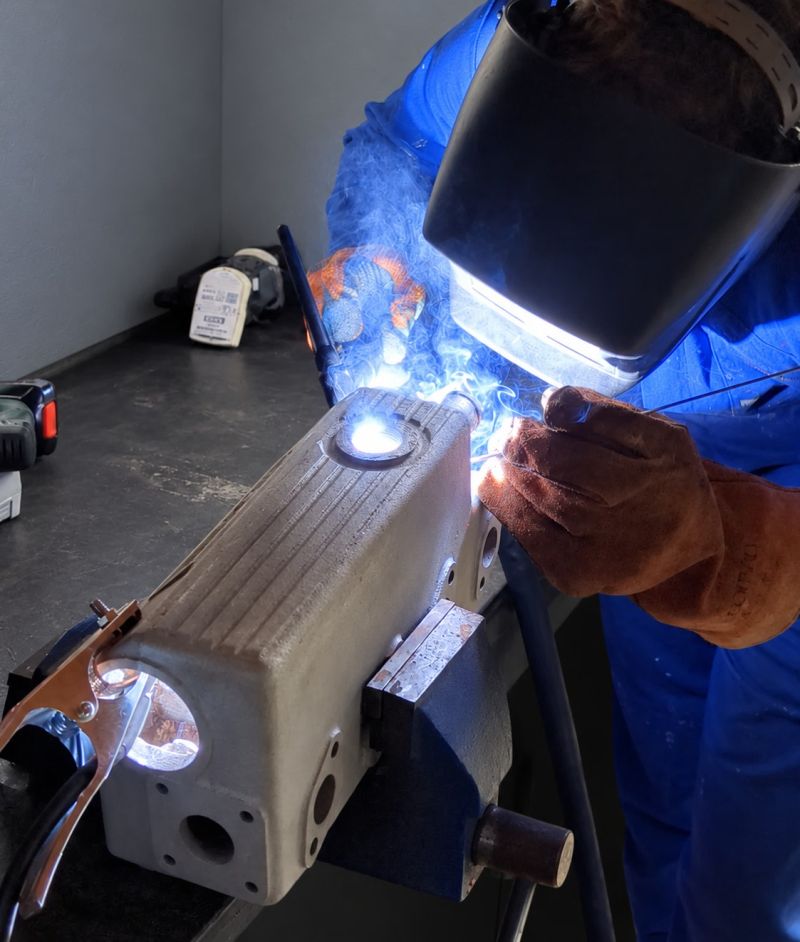
- Exhaust elbow refurbishment — vapour blasting, welding, replacement if necessary
- Heat exchanger descaling & pressure testing
- Oil cooler & charge air cooler testing
- Retubing of heat exchangers, charge air coolers and oil coolers
- Corrosion repairs
Section 6 — When to Stop the Engine
Stop (or if unsafe to do so, reduce load) immediately if:
Stop the Engine If You See:
- Temperature rises rapidly
- Temperature exceeds normal operating temperature
- Steam output increases above normal levels
- Exhaust water flow from the outlet drops
- Coolant loss is visible
Running an overheating engine risks:
- Head gasket failure
- Cracked block
- Warped cylinder head
- Exhaust hose damage
- Turbocharger damage
- Engine seizure
Section 7 — Professional Support
Brehon Engineering diagnoses and refurbishes cooling components for marine engines across the UK, Europe and Channel Islands. If your engine is overheating, losing coolant, showing low exhaust water flow, or struggling under load, professional testing and refurbishment of faulty components is essential to restore proper cooling performance.
Any checks or observations described in this article should only be carried out by someone who is competent and qualified to do so. This article provides general information only — marine cooling-system faults should be diagnosed and repaired by a qualified marine engineer.