
Introduction
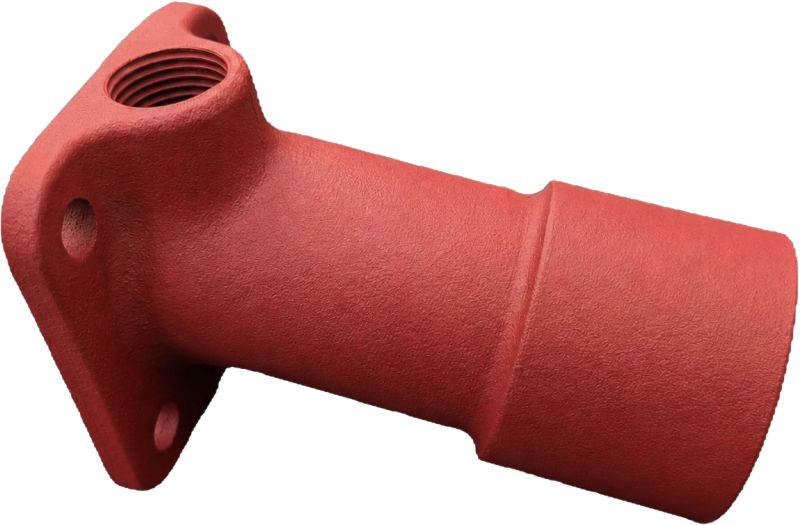
The exhaust elbow (also called the mixing elbow or injection elbow) is a critical part of a raw‑water‑cooled marine diesel. It is where hot exhaust gases meet the incoming raw water before being discharged overboard. Over time, elbows can become restricted by carbon, soot, salt deposits and internal corrosion. This restriction reduces raw‑water flow, increases exhaust backpressure and can lead to overheating, loss of power and accelerated wear of other cooling components. In extreme cases it can lead to raw water flowing back into the engine's cylinders, with the potential for catastrophic damage.
This article explains how exhaust elbow blockage develops, the symptoms boat owners typically see, and how engineers diagnose the issue.
"Most elbows gradually restrict over time rather than failing suddenly — making the symptoms intermittent and often misdiagnosed."
Section 1 — Why Exhaust Elbows Block
Exhaust elbows operate in a harsh environment. Hot exhaust gases mix with relatively cool seawater, creating conditions that promote:
- Carbon and soot accumulation
- Salt crystallisation
- Internal corrosion and pitting
- Narrowing of the water injection passage
- Partial or complete obstruction of the discharge path
Most elbows gradually restrict over time rather than failing suddenly. This makes the symptoms intermittent and often misdiagnosed.
Section 2 — How Exhaust Elbow Restriction Causes Overheating
A restricted elbow affects the cooling system in two ways.
1. Reduced Raw‑Water Flow
If the elbow cannot discharge water freely, the raw‑water flow rate drops. This reduces cooling efficiency through:
- Heat exchangers
- Charge‑air coolers / intercoolers
- Oil coolers
- The exhaust manifold
The result is overheating, often first noticed at higher RPM.
2. Increased Exhaust Backpressure
A blocked elbow forces exhaust gases to push harder to exit the engine. Excessive backpressure can cause:
- Reduced power
- Smoky exhaust
- Difficulty reaching rated RPM
- Higher exhaust temperatures
- Accelerated turbocharger wear (where fitted)
- Damage or rupture of exhaust hoses due to higher discharge temperatures
- Increased fire risk from excessively hot components
Quick Reference: Common Symptoms of Exhaust Elbow Blockage
Section 3 — Common Symptoms of Exhaust Elbow Blockage
Boat owners typically report one or more of the following:
- Engine overheating at higher RPM
- Reduced raw‑water discharge at the stern
- Intermittent overheating that "comes and goes"
- Black smoke under load
- Difficulty reaching normal cruising RPM
- Hot exhaust smell
- Water dribbling instead of pulsing from the outlet
- Soot deposits around the elbow flange
- Corrosion or rust streaks on the elbow exterior
- Excessive steam from the exhaust outlet
Because these symptoms overlap with raw‑water pump wear and heat exchanger fouling, the elbow is often checked last, even though it is one of the most common causes.
Section 4 — How Engineers Diagnose Elbow Restriction
Diagnosis typically involves:
1 Visual Inspection
- Inspect the exterior for corrosion, rust streaks or leakage
- Look for soot deposits around the elbow flange
- Check for signs of cracking or physical damage
2 Removal & Internal Assessment
- Remove the elbow for internal inspection
- Check the raw‑water injection point for blockage
- Examine for carbon build‑up or narrowing of passages
- Assess the mating flange and gasket condition
3 Raw‑Water Discharge Check
- Check raw‑water discharge volume at the stern outlet
- Compare flow at idle vs. higher RPM
- Assess whether flow is pulsing normally or reduced to a dribble
4 Condition Assessment
- Measure wall thickness where possible
- Assess severity of internal corrosion and pitting
- Determine whether cleaning, refurbishment or replacement is appropriate
In many cases, the elbow is the root cause of an overheating issue that has already led the owner to replace impellers, strainers or thermostats unnecessarily.
Section 5 — Refurbishment, Cleaning & Replacement Options
Depending on condition, an elbow may be:
- Cleaned — carbon removal, salt removal, flushing
- Refurbished — machining, surface preparation, coating, weld repairs
- Pressure‑tested — where applicable
- Replaced — if corrosion or thinning is severe
A severely corroded elbow should not be reused, as failure can allow seawater to enter the cylinders.
Section 6 — When to Stop Running the Engine
If the engine overheats rapidly, produces black smoke under load, or shows a sudden drop in raw‑water discharge, it is advisable to stop the engine and investigate (if safe to do so). Continued running with a blocked elbow can cause:
Risks of Continued Running with a Blocked Elbow:
- Turbocharger damage
- Exhaust manifold overheating
- Gasket failure
- Water ingestion into cylinders
- Accelerated wear of cooling components
Section 7 — Professional Exhaust Elbow Inspection & Refurbishment
Exhaust elbows are a common cause of marine engine overheating and performance loss. Regular inspection and cleaning can prevent more serious issues and extend the life of the cooling system.
Brehon Engineering is able to diagnose, clean, refurbish and pressure‑test cooling components fitted to a wide range of raw‑water‑cooled marine diesels and marine generators, including (but not limited to): Yanmar, Volvo Penta (D‑series, TAMD, MD, KAD, etc.), Nanni, Ford Sabre, Ford Mermaid, Ford Lehman, Vetus, Lister and Lister Petter, Lombardini, Westerbeke, Beta Marine, Sole Diesel, Bukh, Sabb/Saab, FPT (Fiat Powertrain), Iveco, Watermota (Sea Panther, Crossflow, etc.), Kubota‑based marinised engines, Thorneycroft, Peugeot/Indenor marinised engines, Isuzu‑based marinised engines, John Deere marine diesels, MAN (small marine diesels), Scania (older marine diesels), Mercedes‑based marinised engines, Gardner, Detroit Diesel, Cummins (B‑series and QSB/QSC), Caterpillar marine engines (heat exchangers, charge air coolers and raw‑water side components), and other raw‑water‑cooled marine engines and marine generators.
Any checks or observations described in this article should only be carried out by someone who is competent and qualified to do so. This article provides general information only — marine cooling-system faults should be diagnosed and repaired by a qualified marine engineer.